Sanctuary Spaces reframes Scotland’s community land ownership legislation to enable communities protect urban green spaces. You can view the full report here
A tale of two bowling clubs
This project aimed to understand barriers to community land ownership through participatory design. I was based at Bowling Green Together, in a diverse neighbourhood in the Southside of Glasgow. Bowling Green Together is a former bowling club that hosts culturally affirming events, a community growing space and even a sauna. This space embodies a new future for disused bowling clubs.
Less than two miles away, Mount Florida Bowling Club closed down in 2019 as its membership dwindled. The potential green space holds significant value for local people area, many streets in Mount Florida do not have adequate access to green space, according to Glasgow city council's Open Space Strategy. It was purchased by a property developer in 2021, and the future of the green as a civic space is under threat.
I approached the topic through a decolonial lens and with a more-than-human, regenerative design framework. This meant understanding land justice beyond the legal view of 'ownership'. I conducted interviews, case studies, public engagements, created a zine and ran a co-creation workshop during this four week project.
Challenges
The Community Right to Buy framework was designed for rural communities - it explicitly can't be used to protect spaces from property developers. It's only when a community is losing a space that they need to save it, and once the land has been sold to a private owner, it is nearly always too late.
There is one, underutilised part of the Community Right to Buy that allows communities to register a community interest in land. Undergoing this process would mean that the land owner would have to offer the land to a community before selling to anyone else. However, communities are often busy working on immediate, time sensitive issues in their area, and there is limited knowledge about this process.
The challenge was to design an intervention that resonates with diverse, urban communities and encourages proactive registration of interest in potential sites for shared use.
There are over 800 bowling clubs and greens in Scotland and they're closing rapidly. To many people, their only memory of their bowling club is the gates they see as they walk past, never forming a strong enough connection to want to 'save' these spaces from development. Their status as private members clubs that are not open to the general public means they are often overlooked as potential (desperately needed) community assets.
My approachI used ethnography, public engagement, and participatory workshops to centre Global Majority voices and the lived experiences of people affected by urban land struggles. By spending time in spaces like Bowling Green Together and working with local residents in Mount Florida, I was able to ground the research in real relationships and everyday experiences.
The aim was to understand the barriers to urban community land ownership in Glasgow. I began with two questions:
How can Scotland’s community land ownership movement become more accessible and inclusive for urban communities facing systemic barriers?
How can community land ownership be reframed so that urban communities feel motivated and supported to register interest?
As the research progressed, a third question emerged:
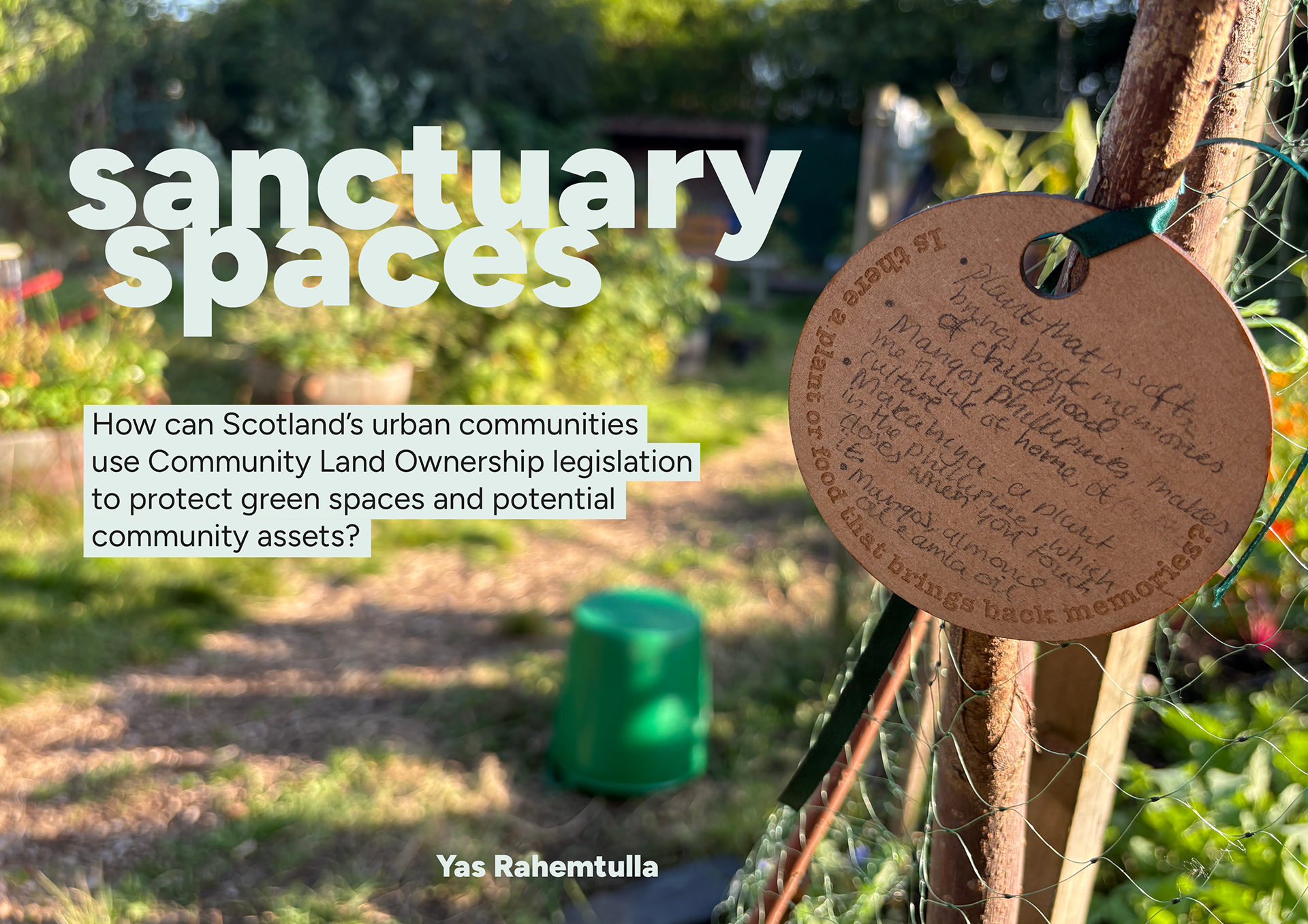
How can Scotland’s urban neighbourhoods use Community Land Ownership legislation to protect green spaces and other potential community assets? (page 7)
Public Engagement at Glasgow zine fair
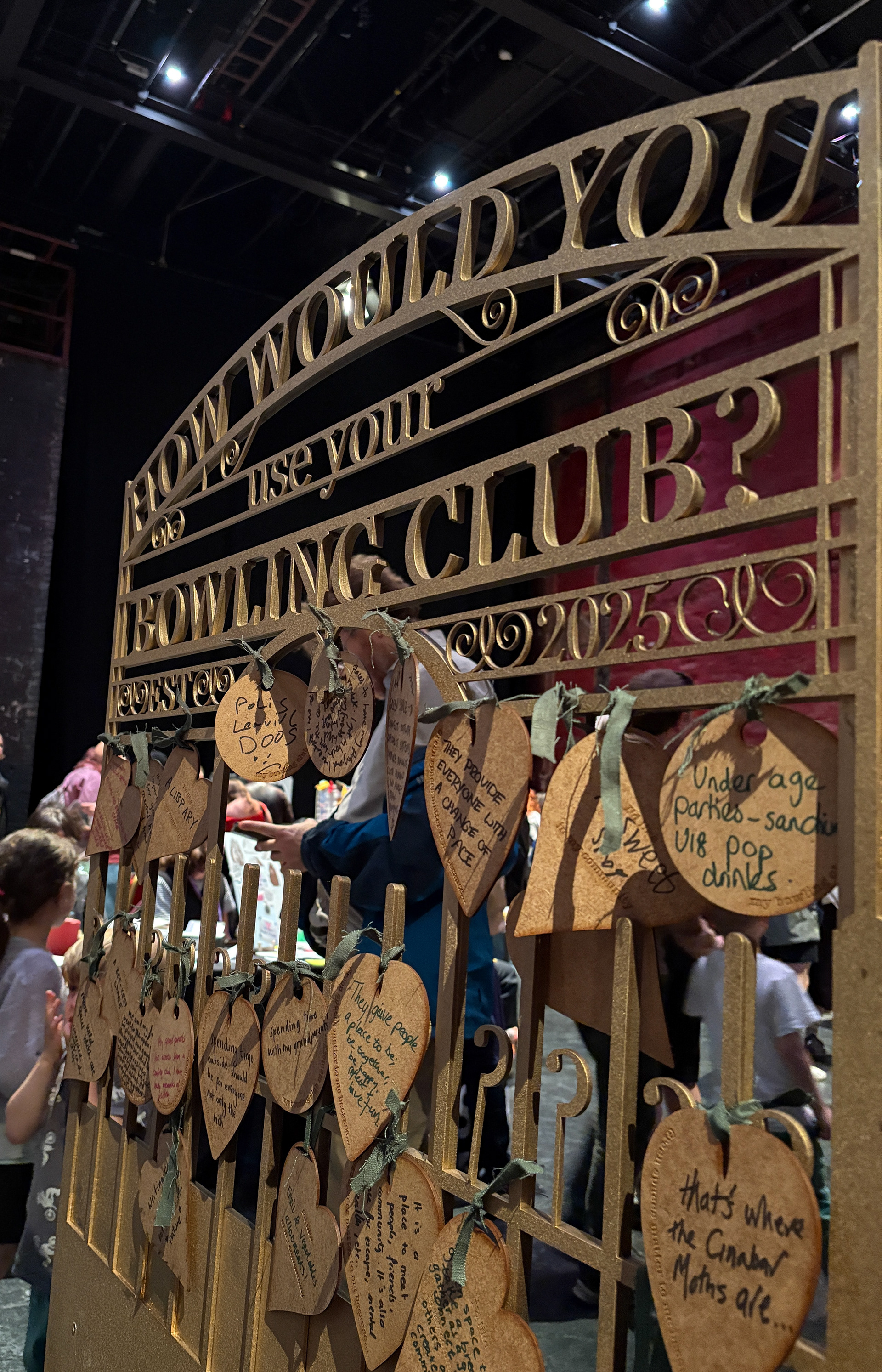
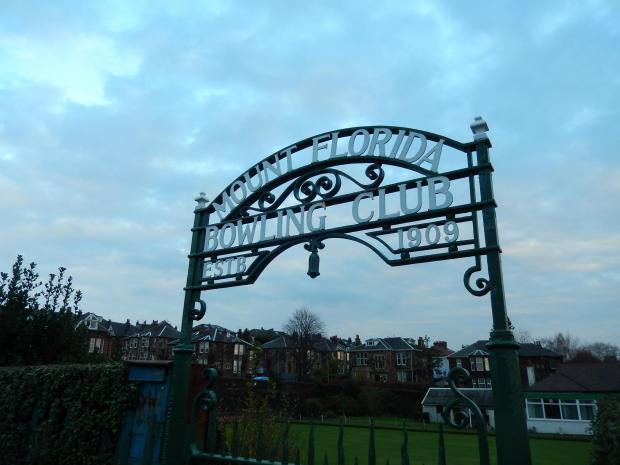
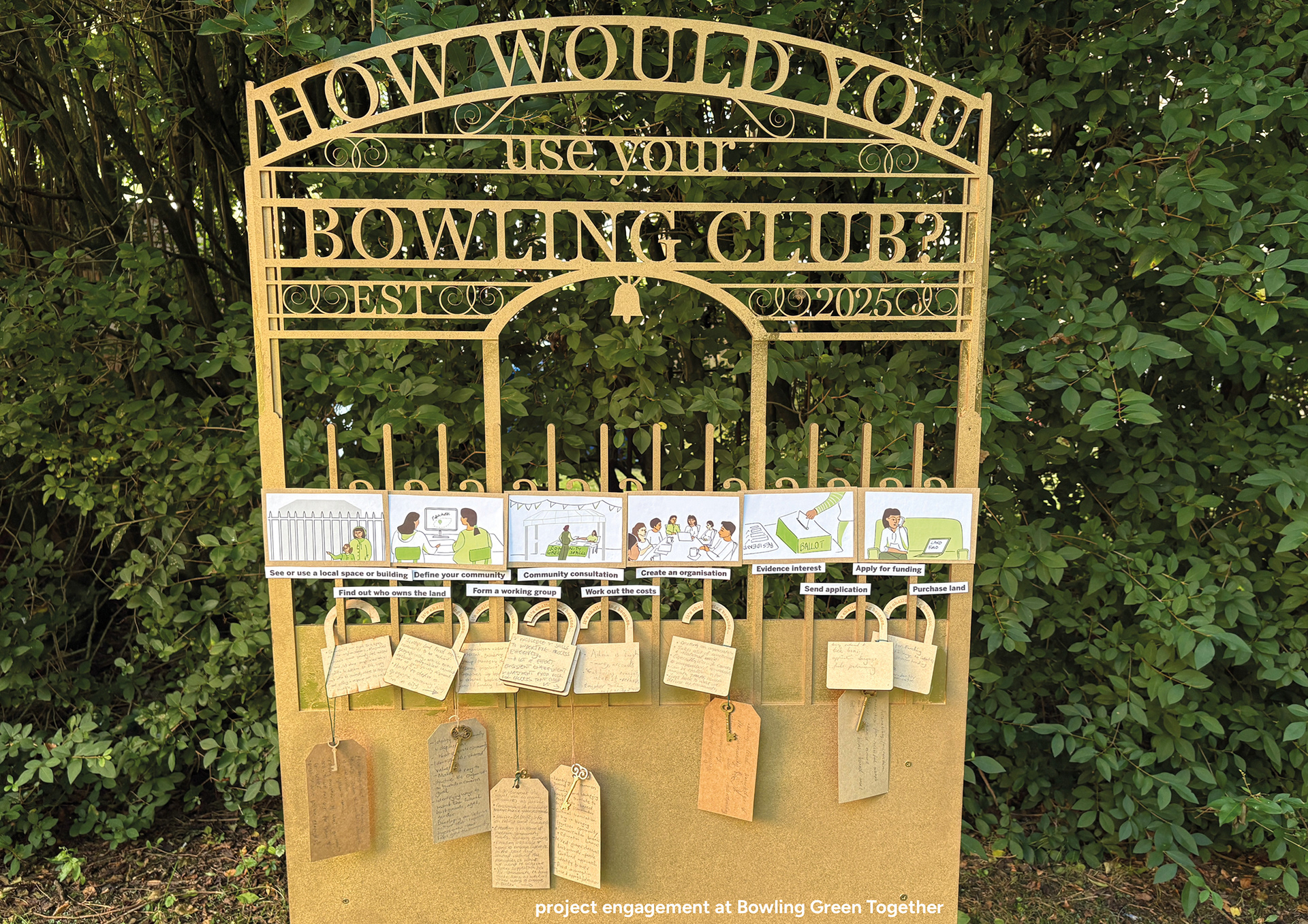
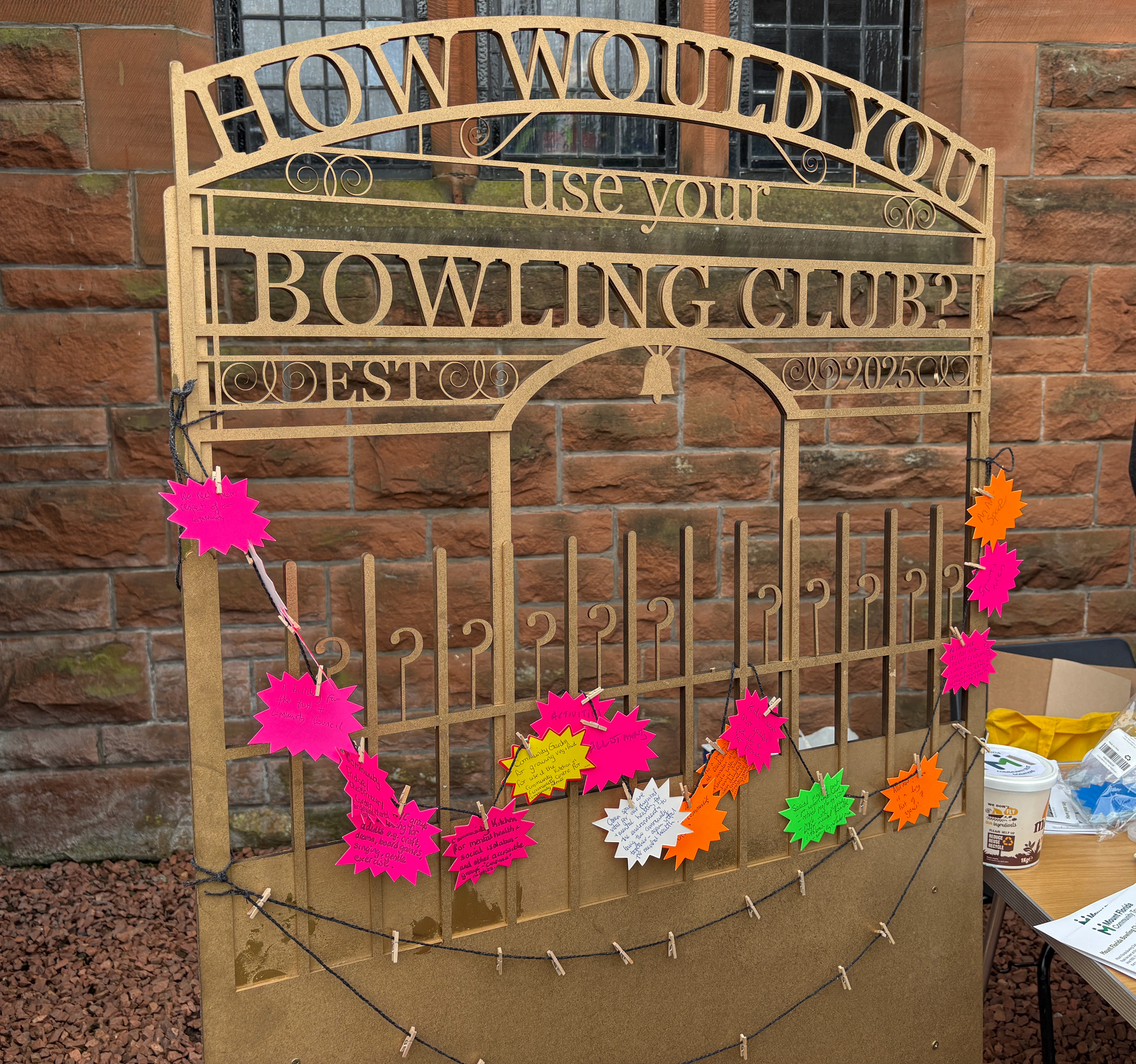
I built a 1.6m provotype (provocation + prototype) gate to open up conversations with members of the public. It was based on Mount Florida Bowling Club's iconic gate. I sprayed the gate gold to symbolise exclusivity and wealth, the gate is literal, but it's also a metaphor for the communities who are locked out of these spaces, and locked out of community land ownership through lack of knowledge about their rights and the way that policy and decision making rarely trust communities.
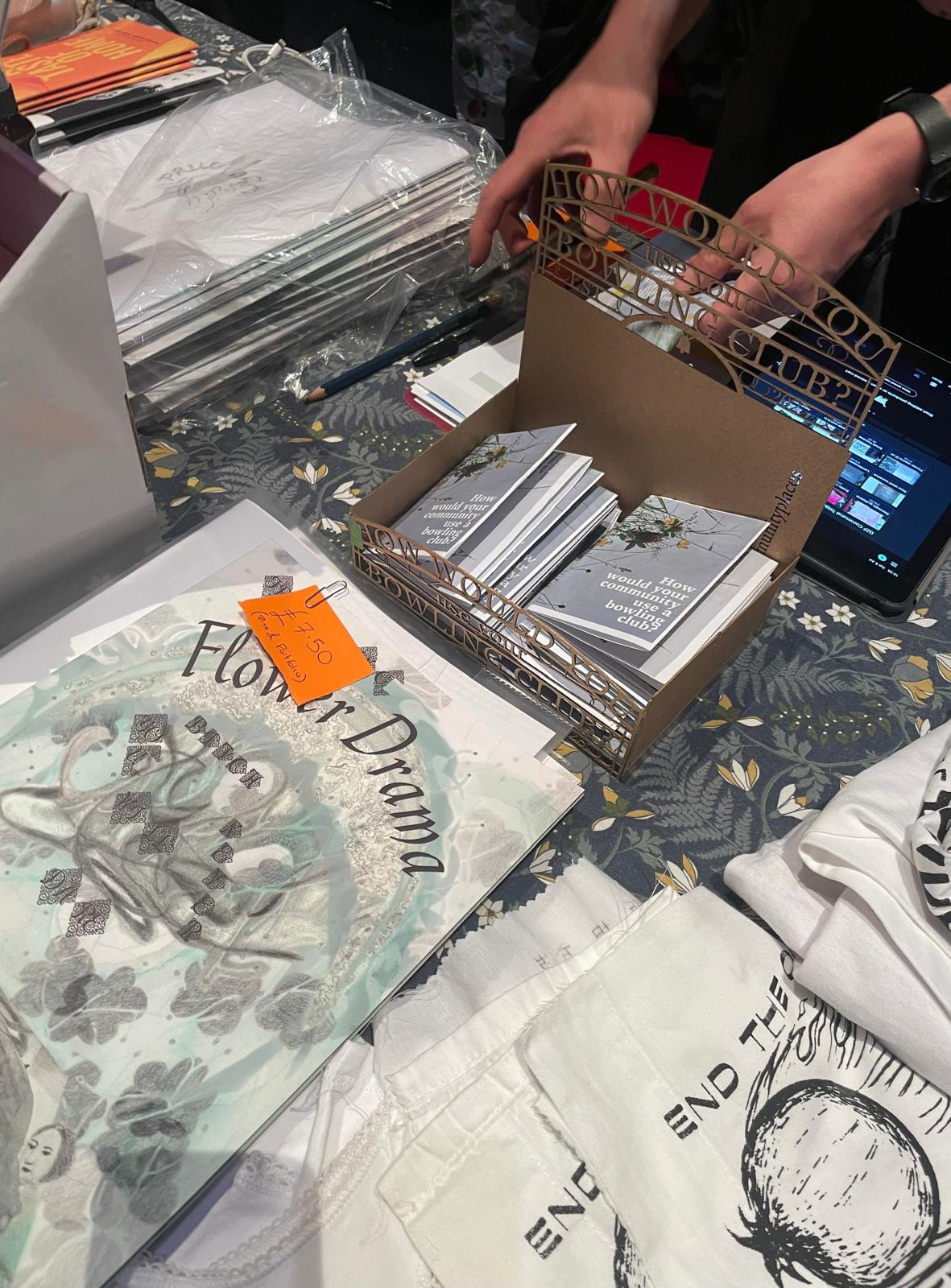
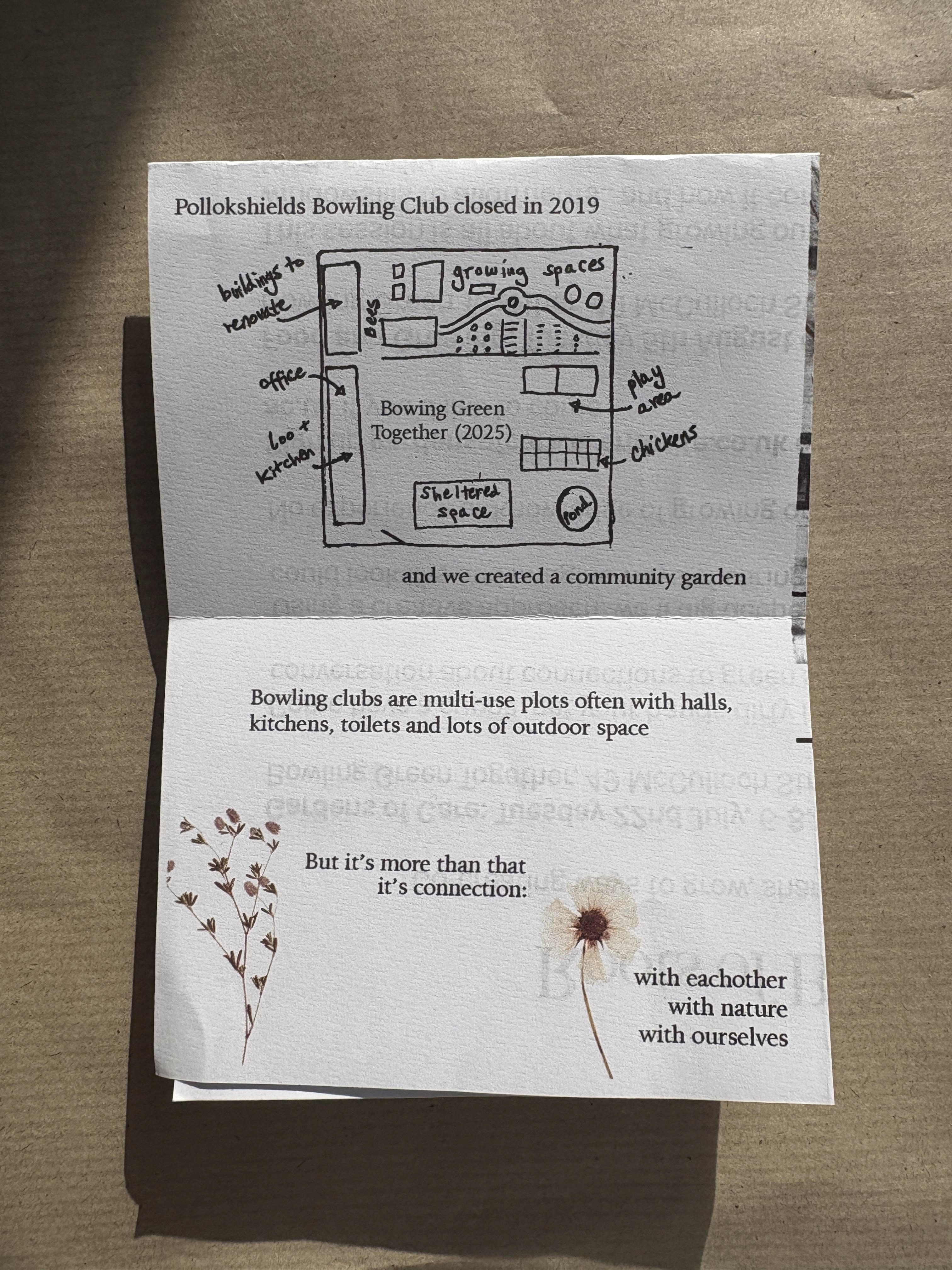
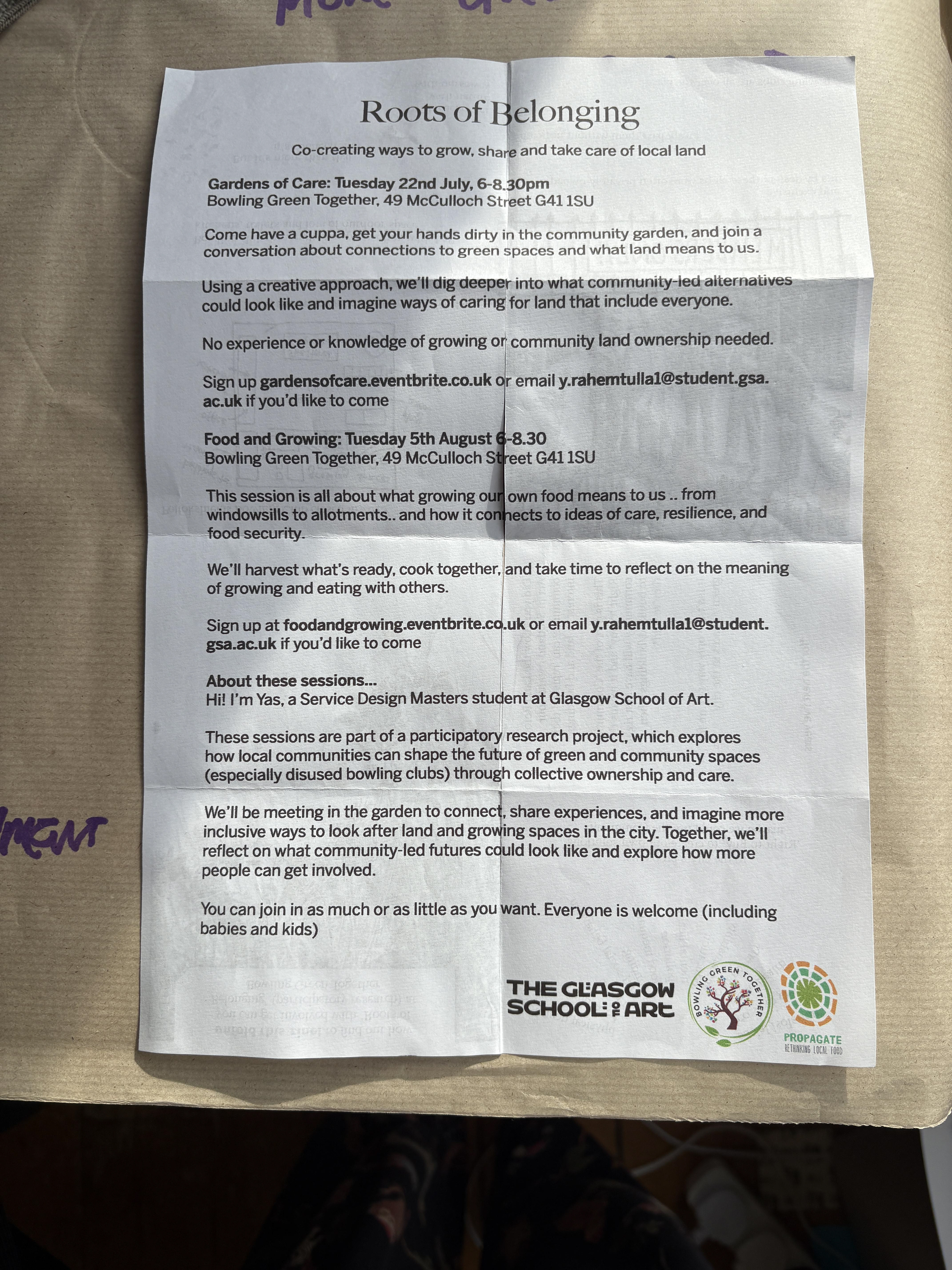
I asked people questions at the zine fair, I also created a low-fi zine to make a complex legal process - community land ownership - more relatable and inclusive. The zine told the story of Bowling Green Together and invited people to participate in garden-based co-creation sessions.
FACILITATING A CO-CREATION WORKSHOP AT BOWLING GREEN TOGETHER
I facilitated 'Roots of Belonging', a garden-based co-creation workshop, with the support one of the gardeners from Bowling Green Together.
We began the session gardening together: connecting with the earth, growing together and building trust. I recognise the burnout communities are facing, and I wanted this process to be reciprocal.
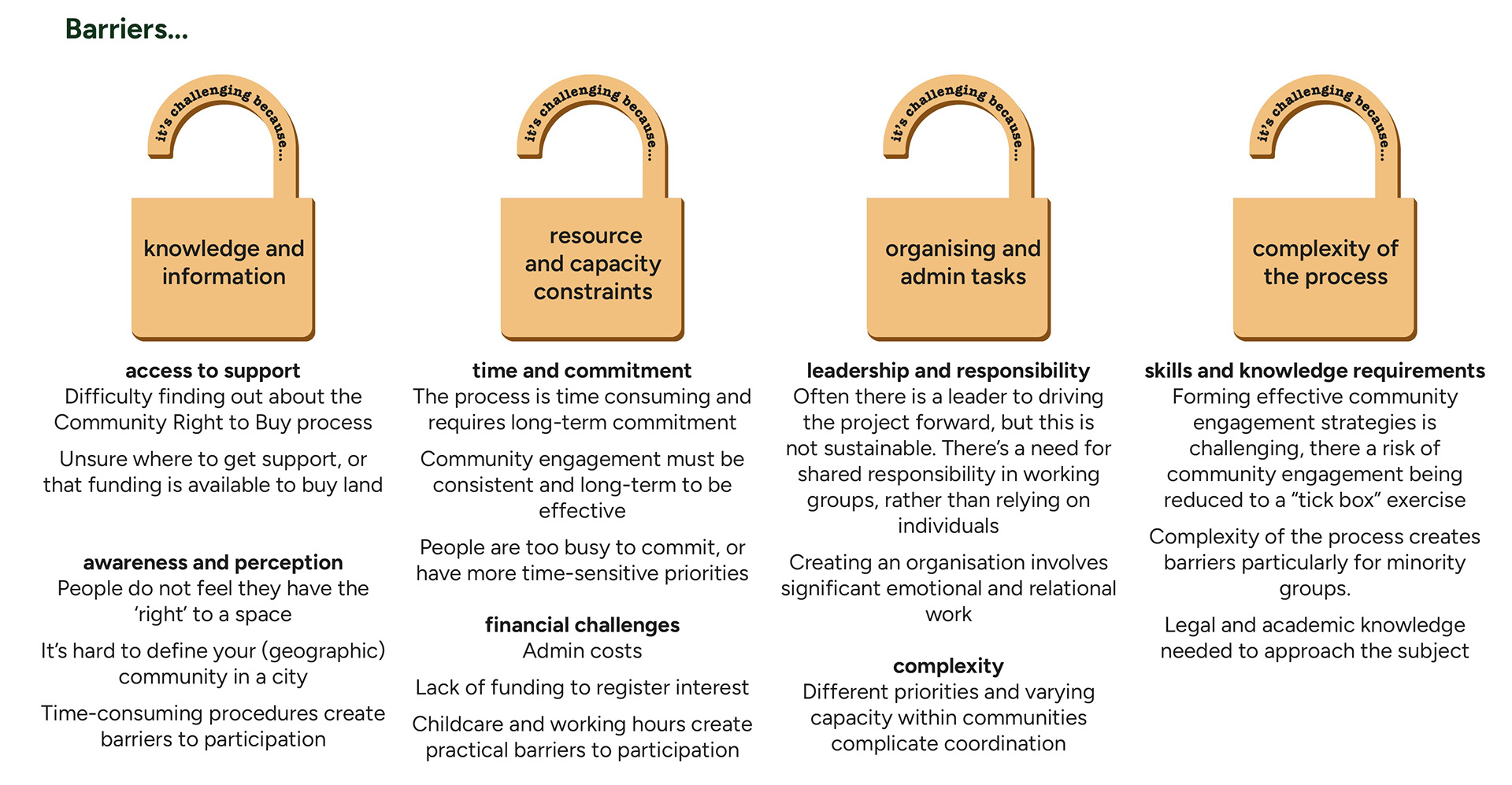
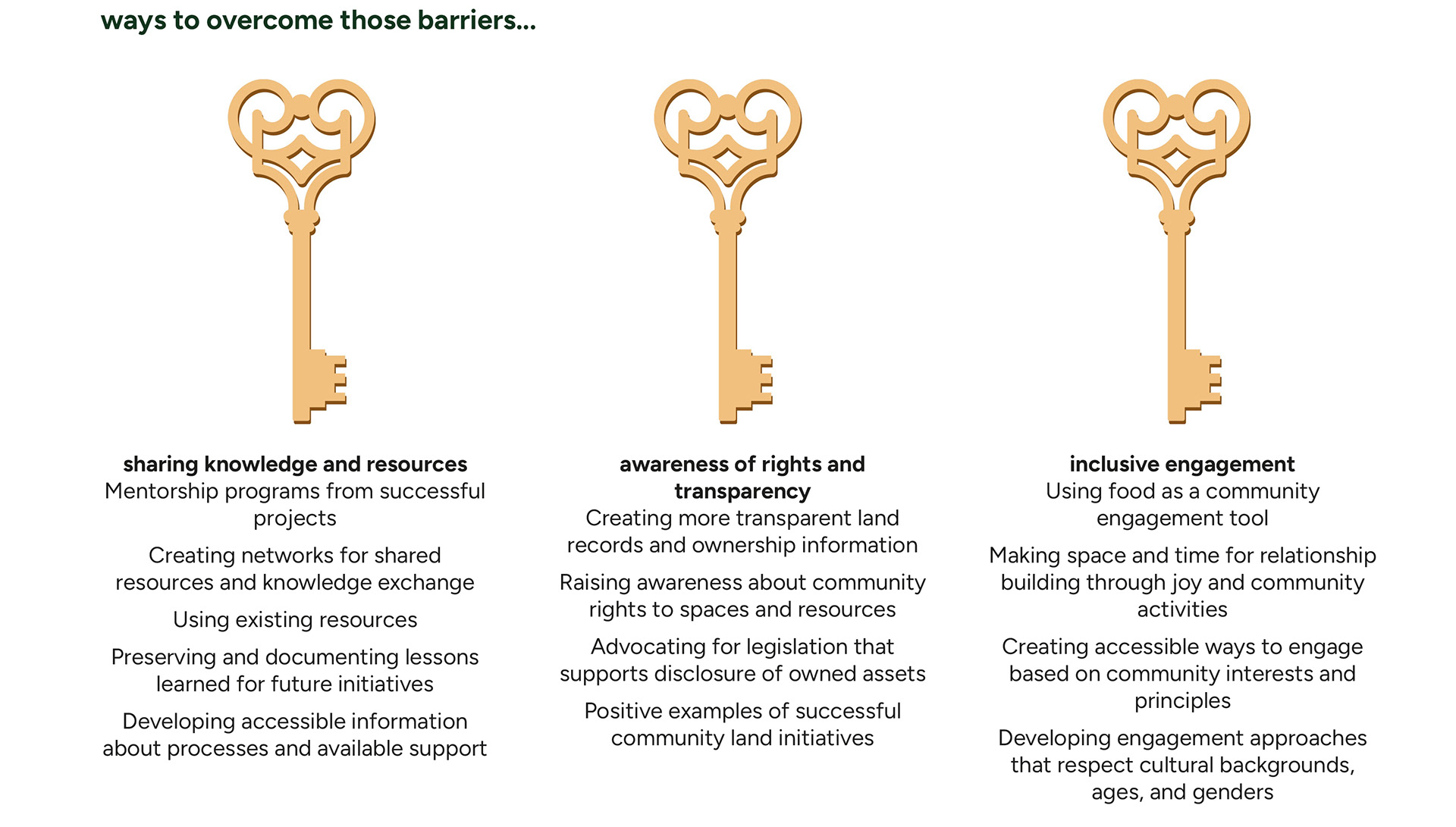
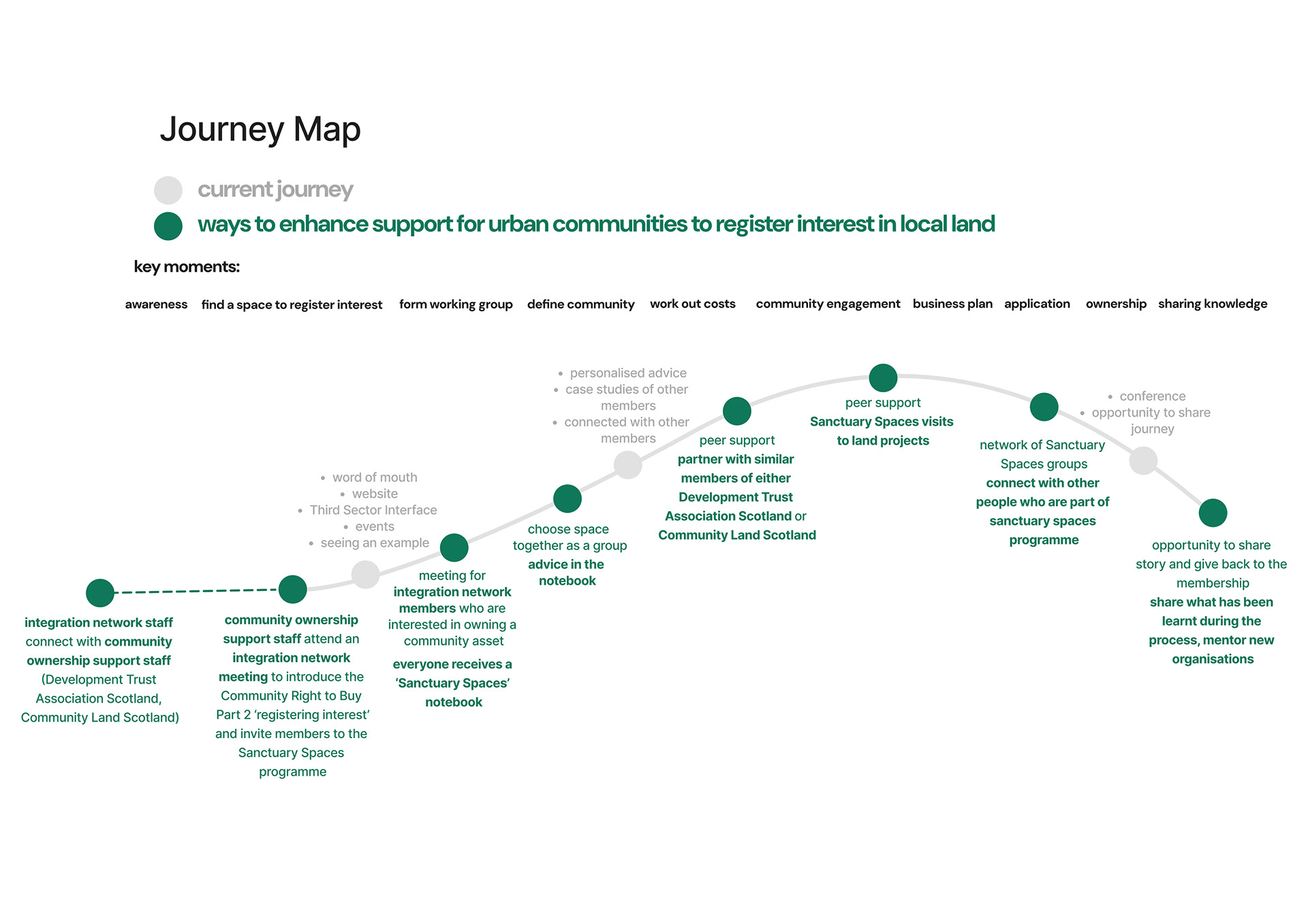
Building trust at the beginning had an impact on the process! I introduced the group to the process through a journey map and storyboard about registering community interest in land. Small teams worked together to identify shared barriers (locks) and ways to overcome them (keys).
Below: key themes from the workshop
Mount Florida Community Engagement
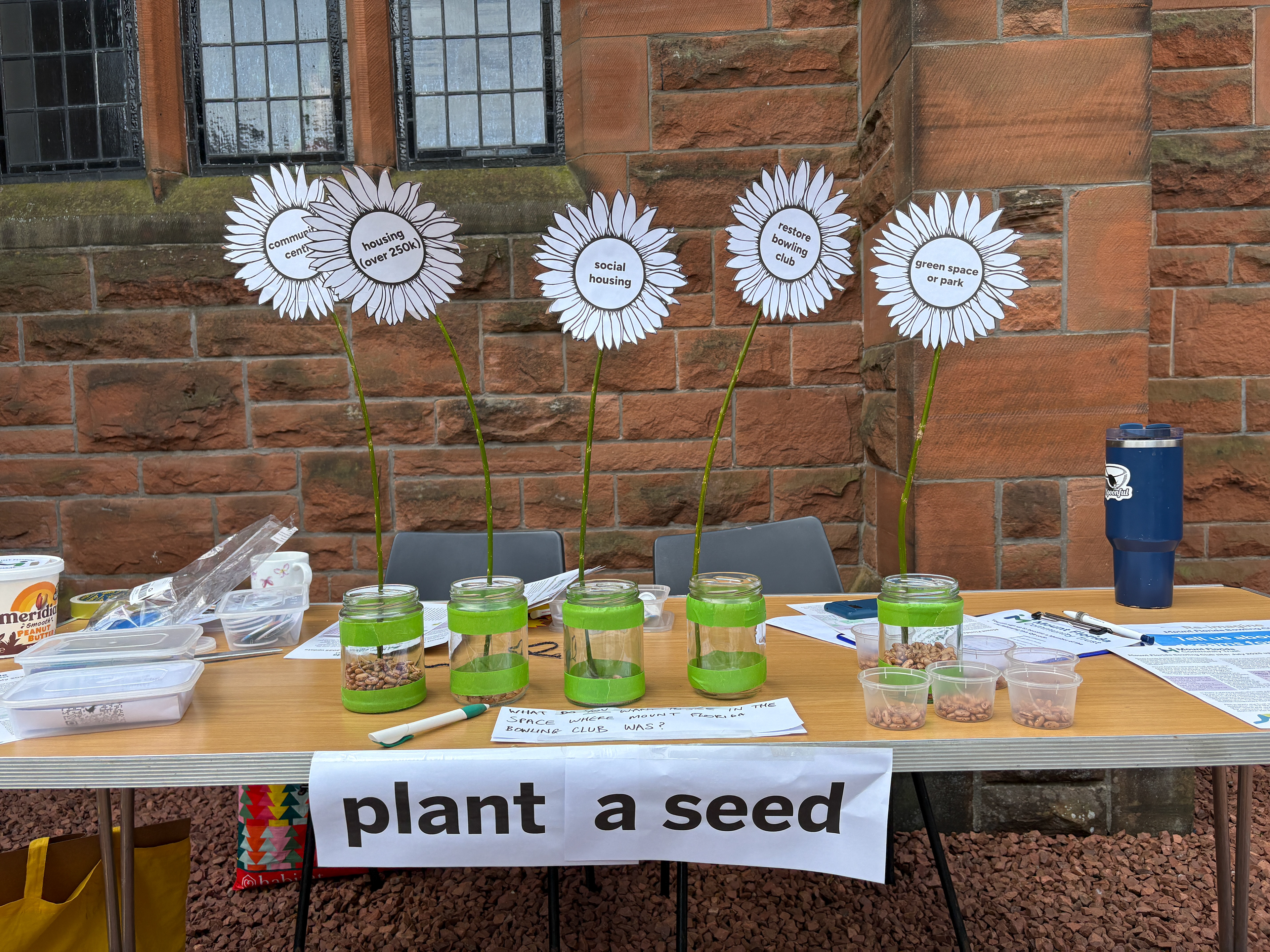
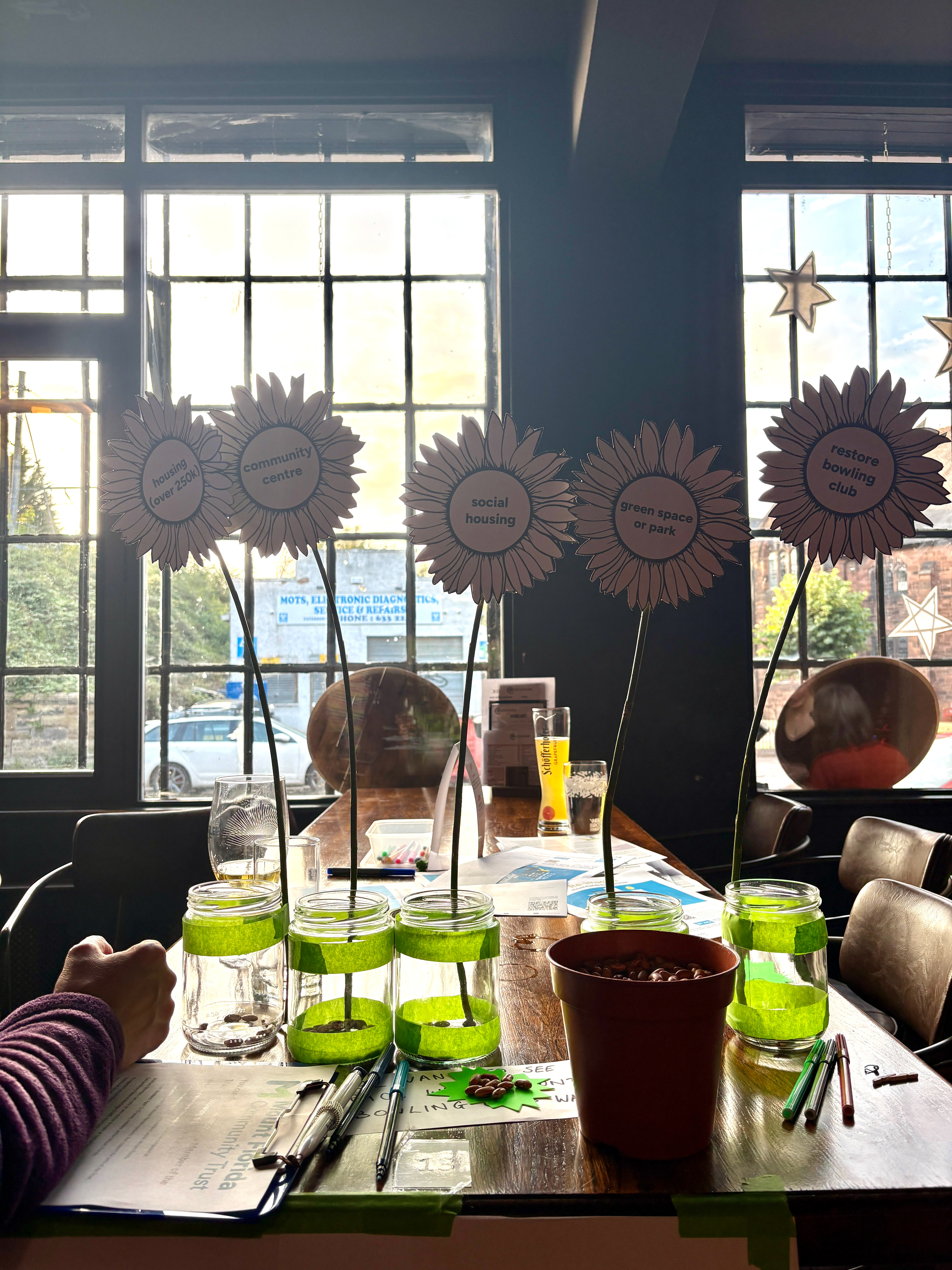
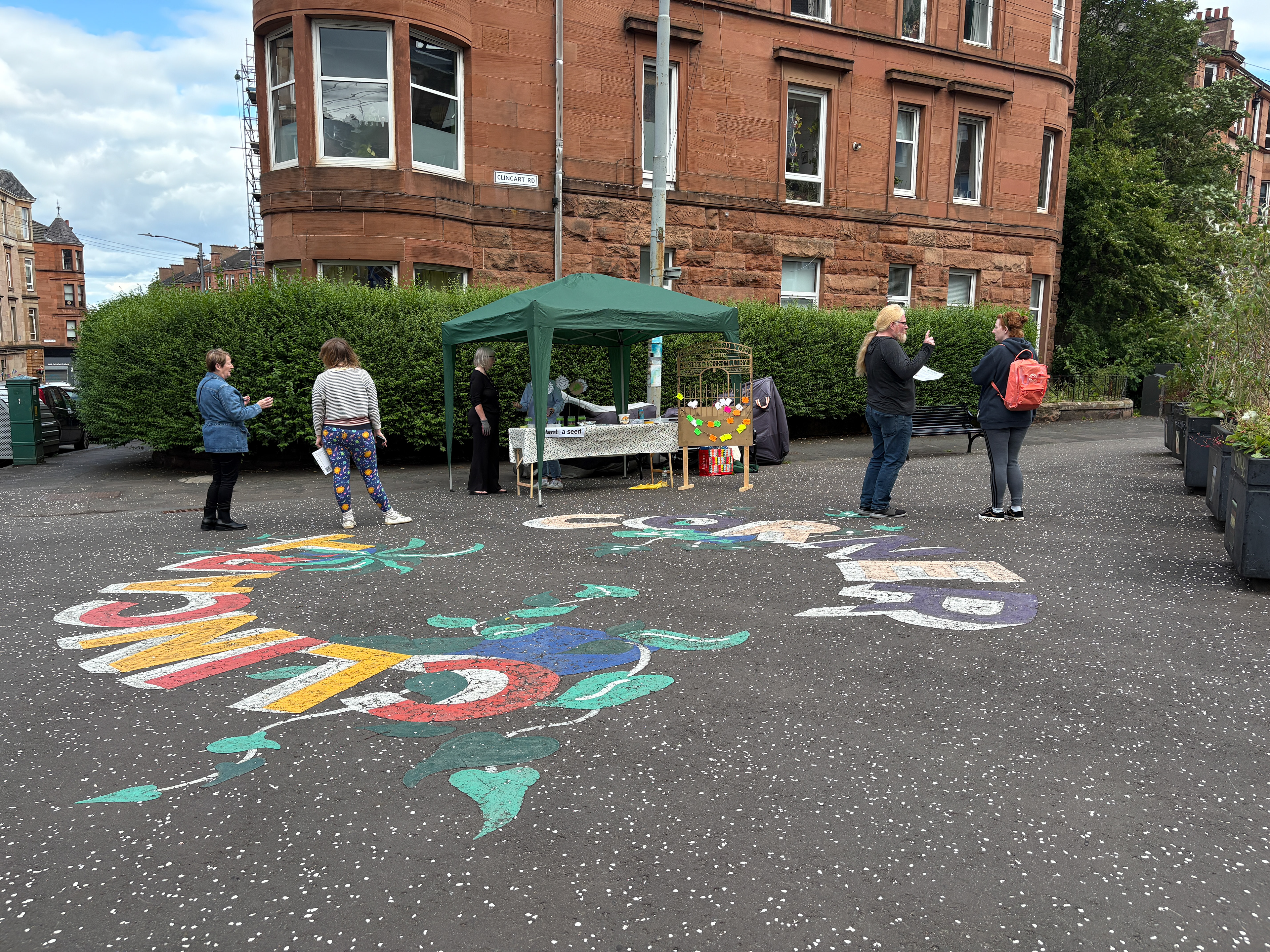
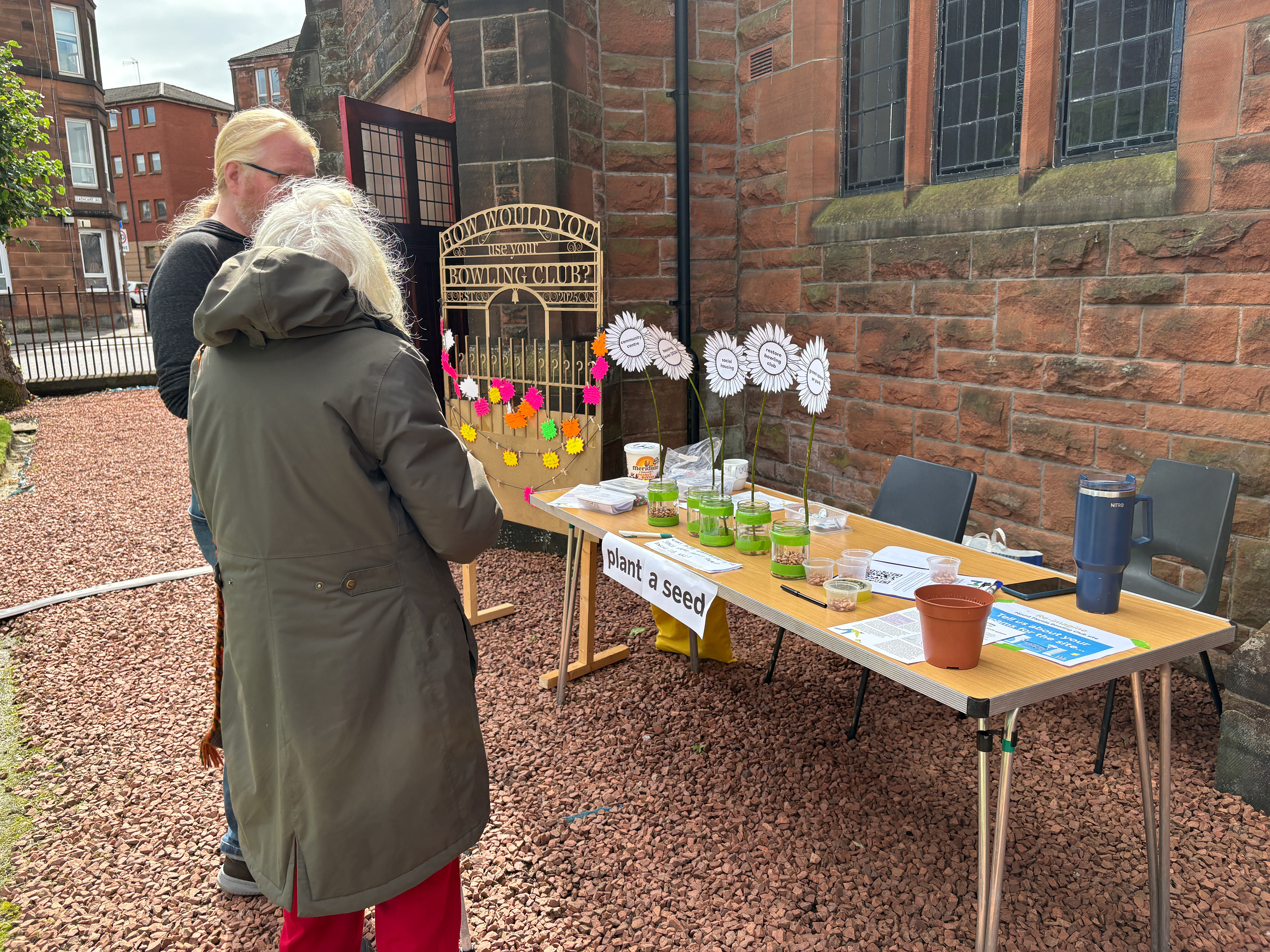
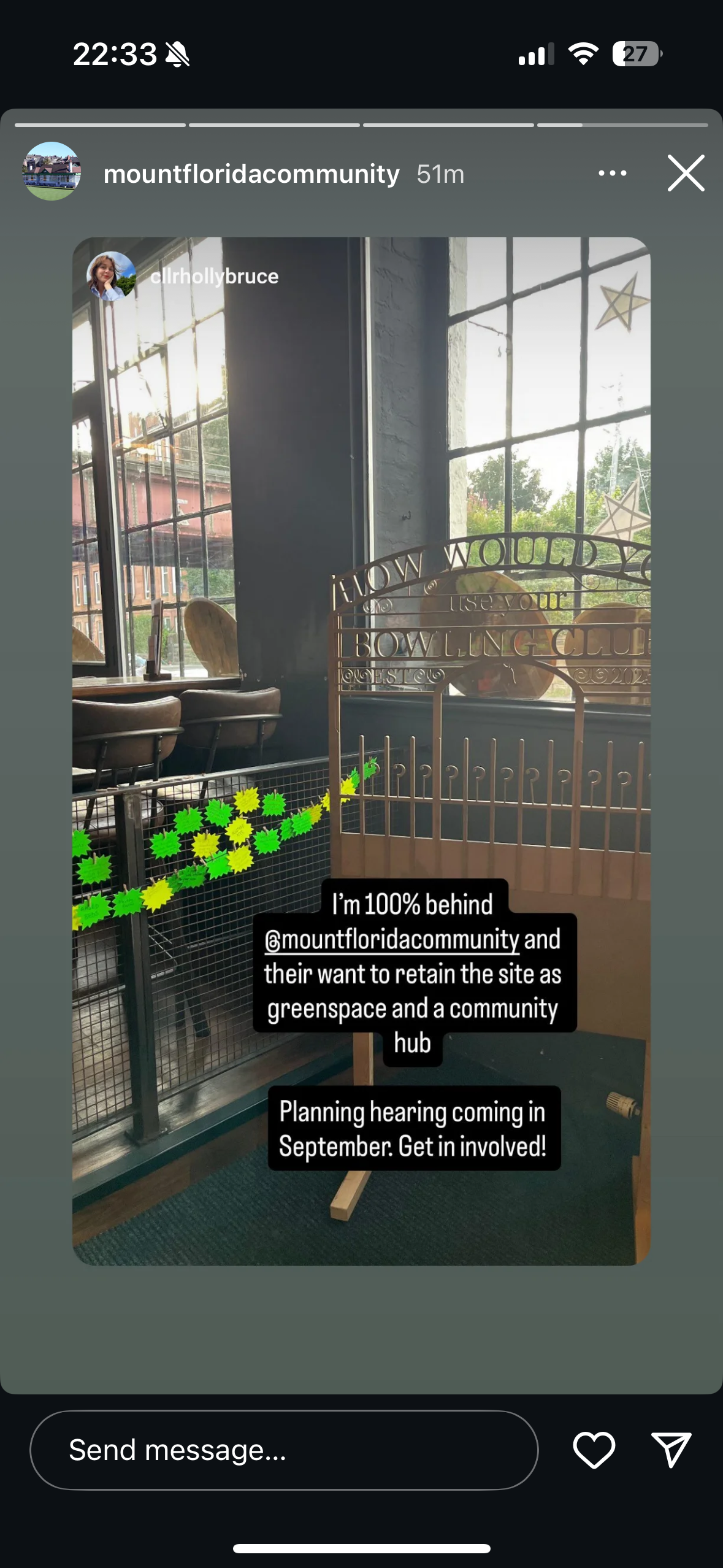
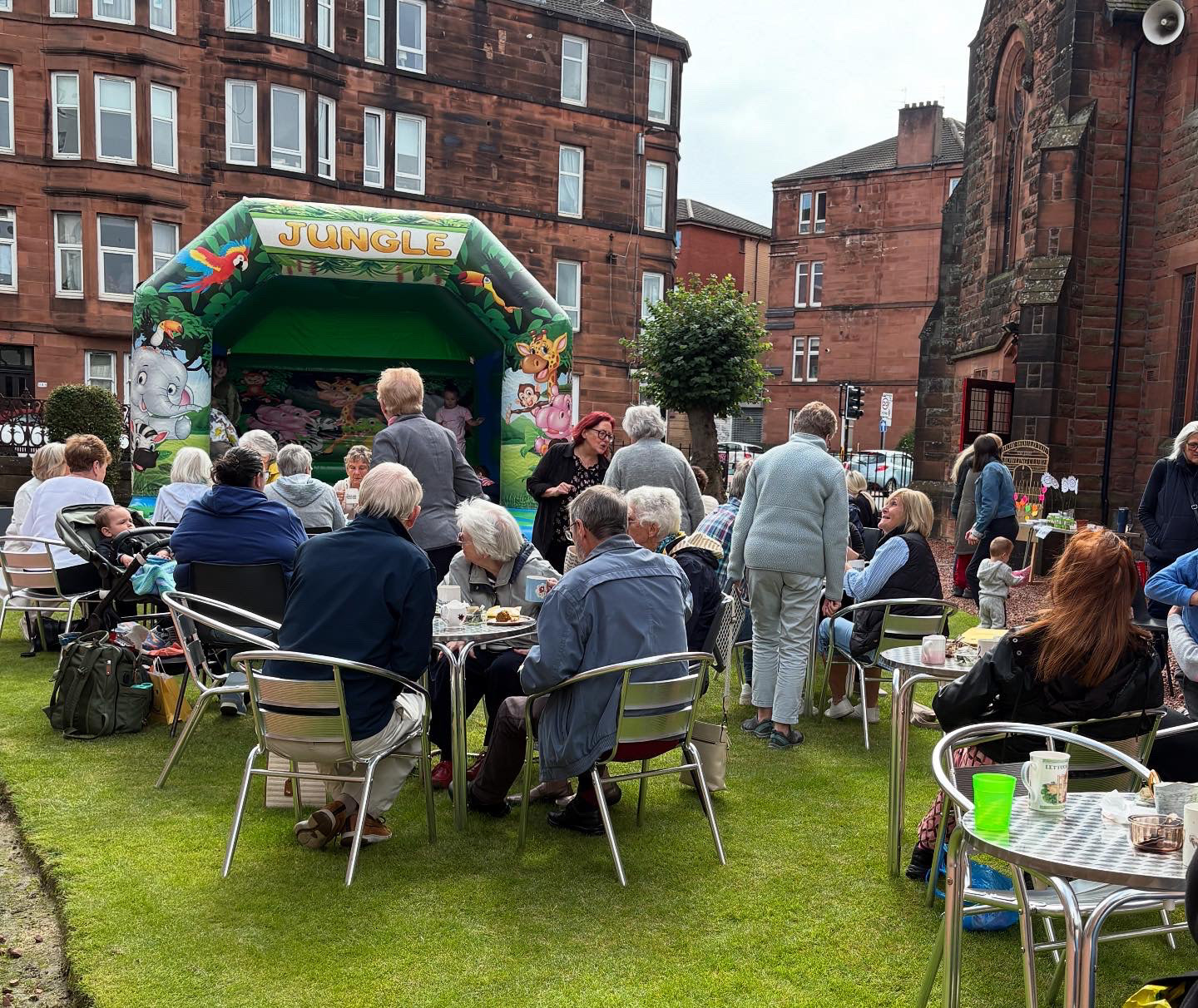
Community engagement for Mount Florida Community Trust aimed to inform people about the planning permission hearing and find out what local people would like the space to be used for - this would strengthen the appeal against proposed property development on the site.
Working in a team with two other service designers, we created opportunities for local people to have their voices heard both in-person or online. We spoke with Mount Florida residents in the pub, at a church coffee morning and on the street. While speaking with people, we would write their opinions and hang them from the bowling club gate.
The 'plant a seed' engagement allowed a simple way for people to 'vote' with borlotti beans for five different options. This worked well for engaging with children or people who didn't have much time to speak with us. Our insights were put into a report and sent to councillors ahead of the hearing.
Unfortunately, planning permission was granted to the property developer. Although it was not the decision that Mount Florida Community Trust had hoped for, it emphasised the importance of protecting potential community assets before it's too late...
ANALYSIS
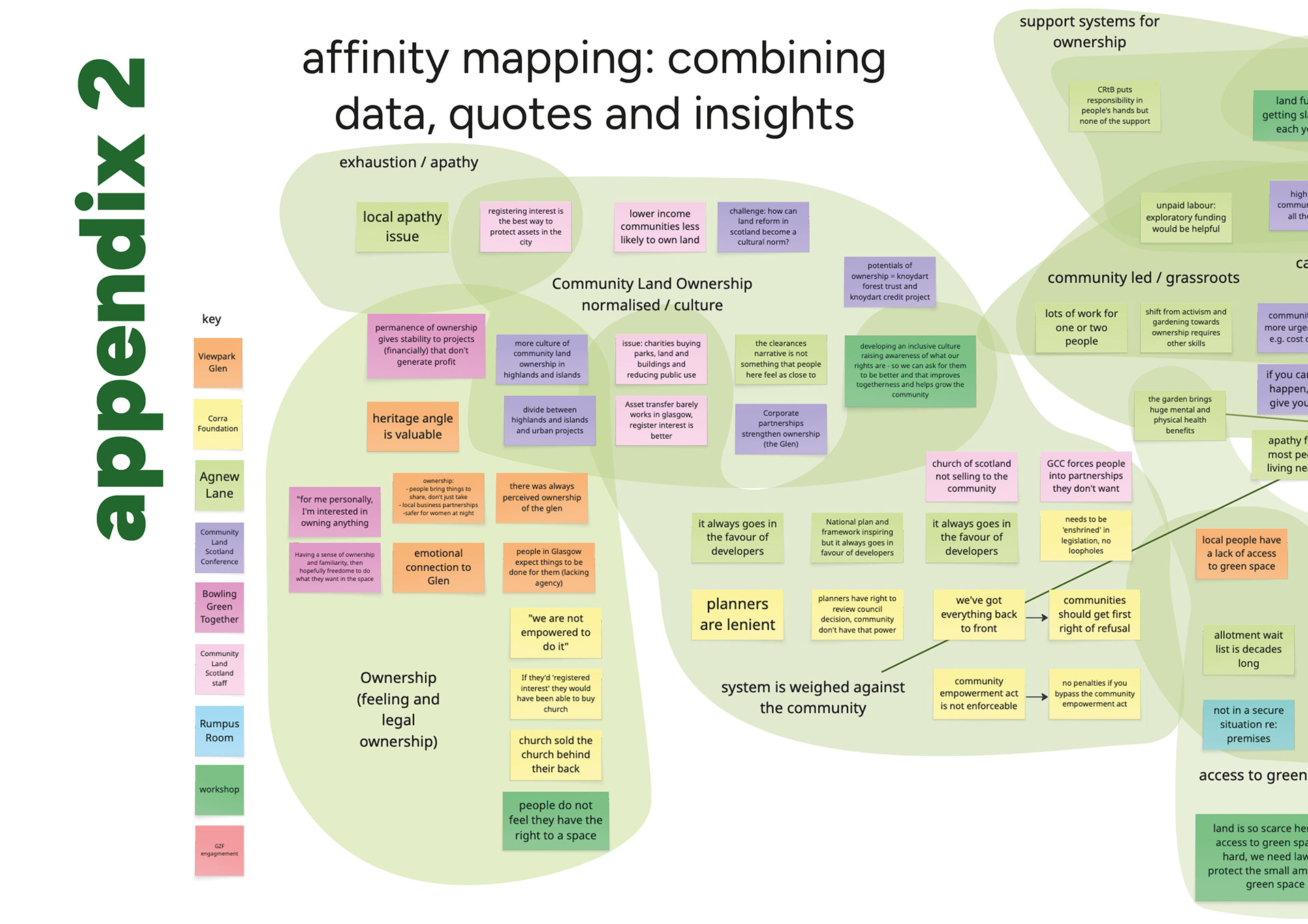
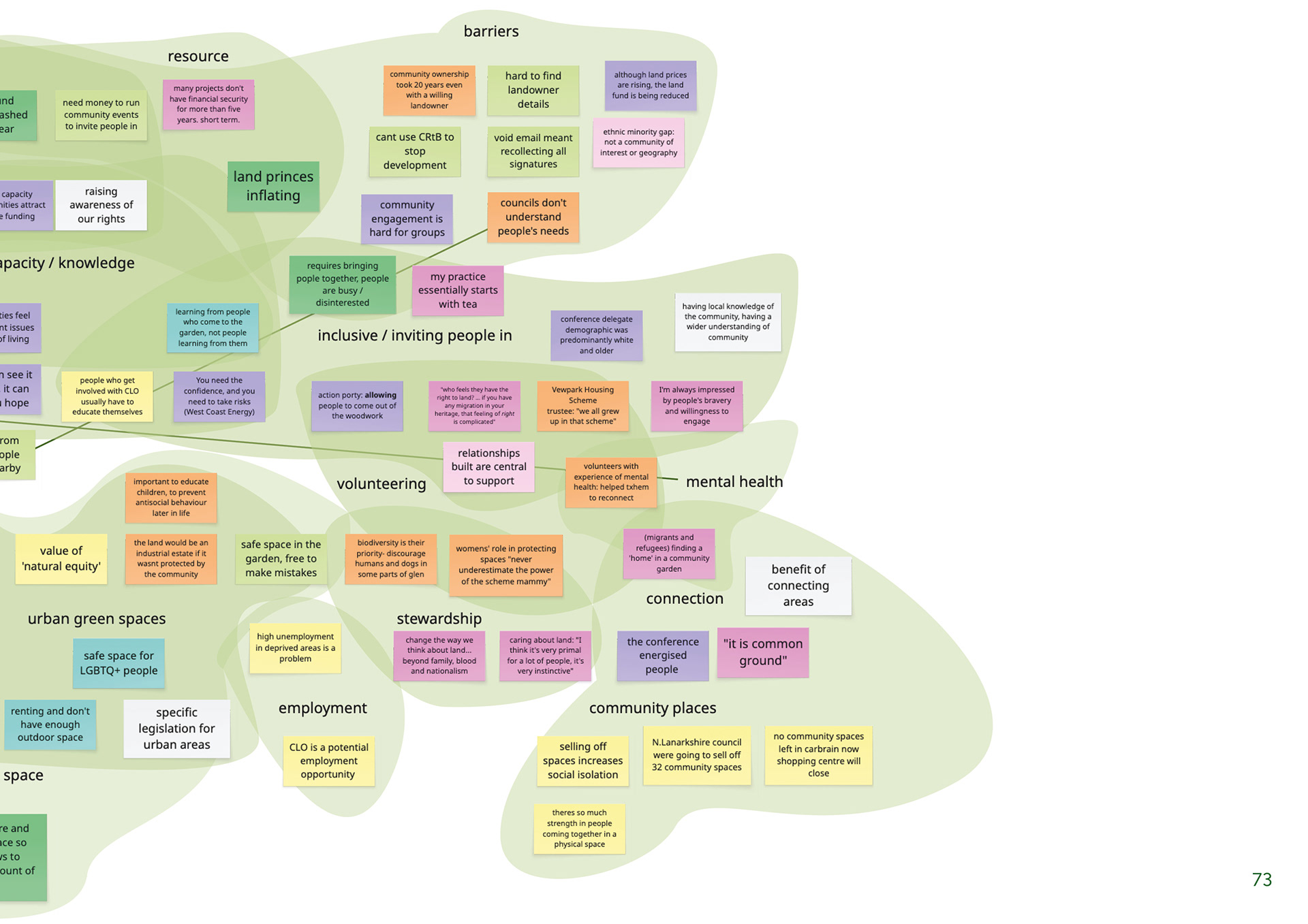
Qualitative data analysis through data analysis and synthesis, including affinity mapping (pictured above) was integral to developing key insights and themes.
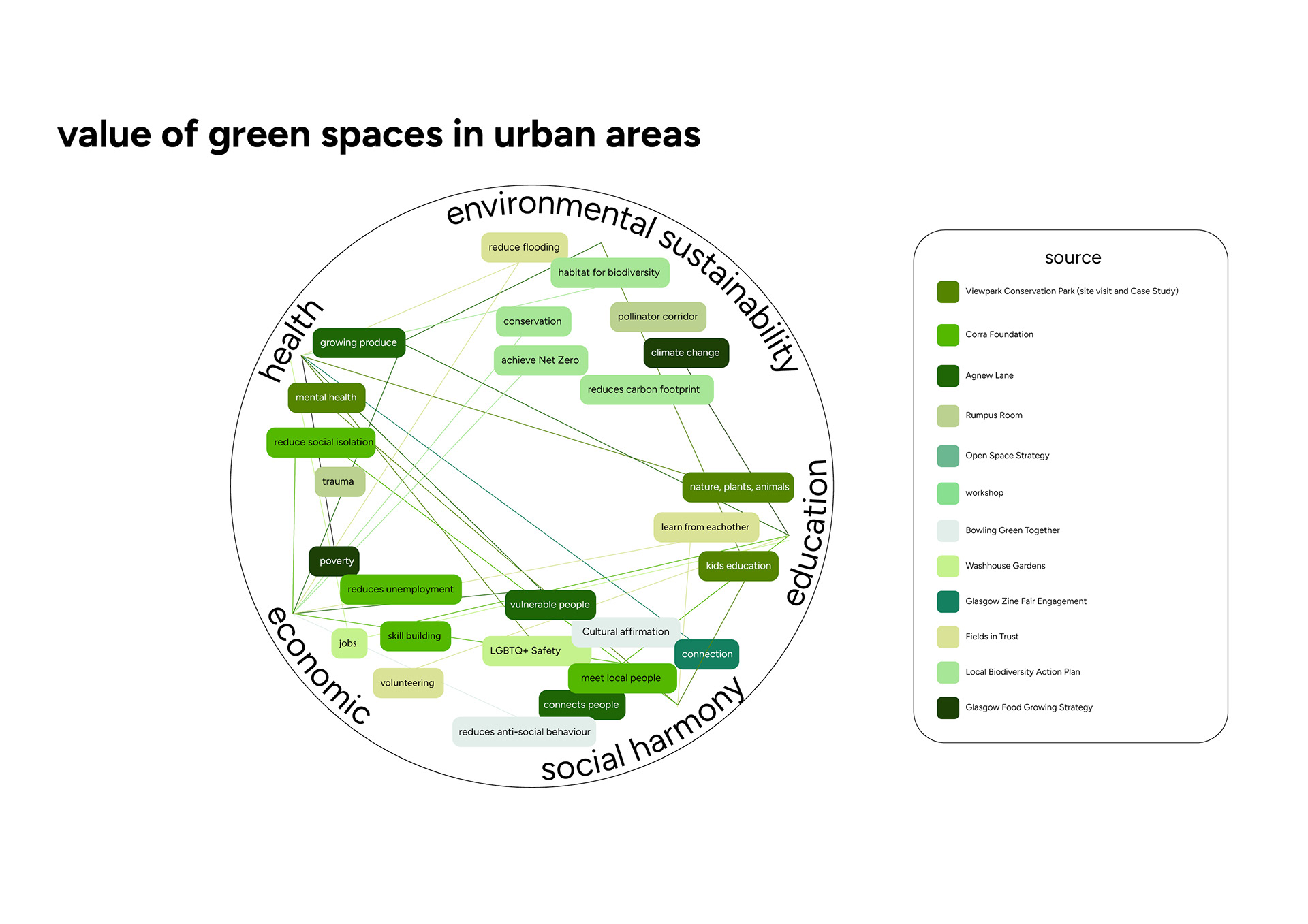
The interconnected circles map below shows how different organisations spoke about green spaces and their value to areas for a multitude of reasons.
“Sanctuary is not a place, but a practice, a way to become-with a world that is never not broken”
Bako Amolafe
Outcome
The project resulted in a service design proposal called 'Sanctuary Spaces'. The service focuses on the symbiotic relationship between people in cities and nature. The insights I developed led to the understanding that local people did not relate to the current rhetoric around land or the concept of ownership, but they were interested in protecting spaces, especially green spaces in the city. From volunteering at and visiting many green spaces in Glasgow, I found that they're essential spaces to protect Global Majority communities and other groups who are becoming increasingly unsafe as communities become more divided.
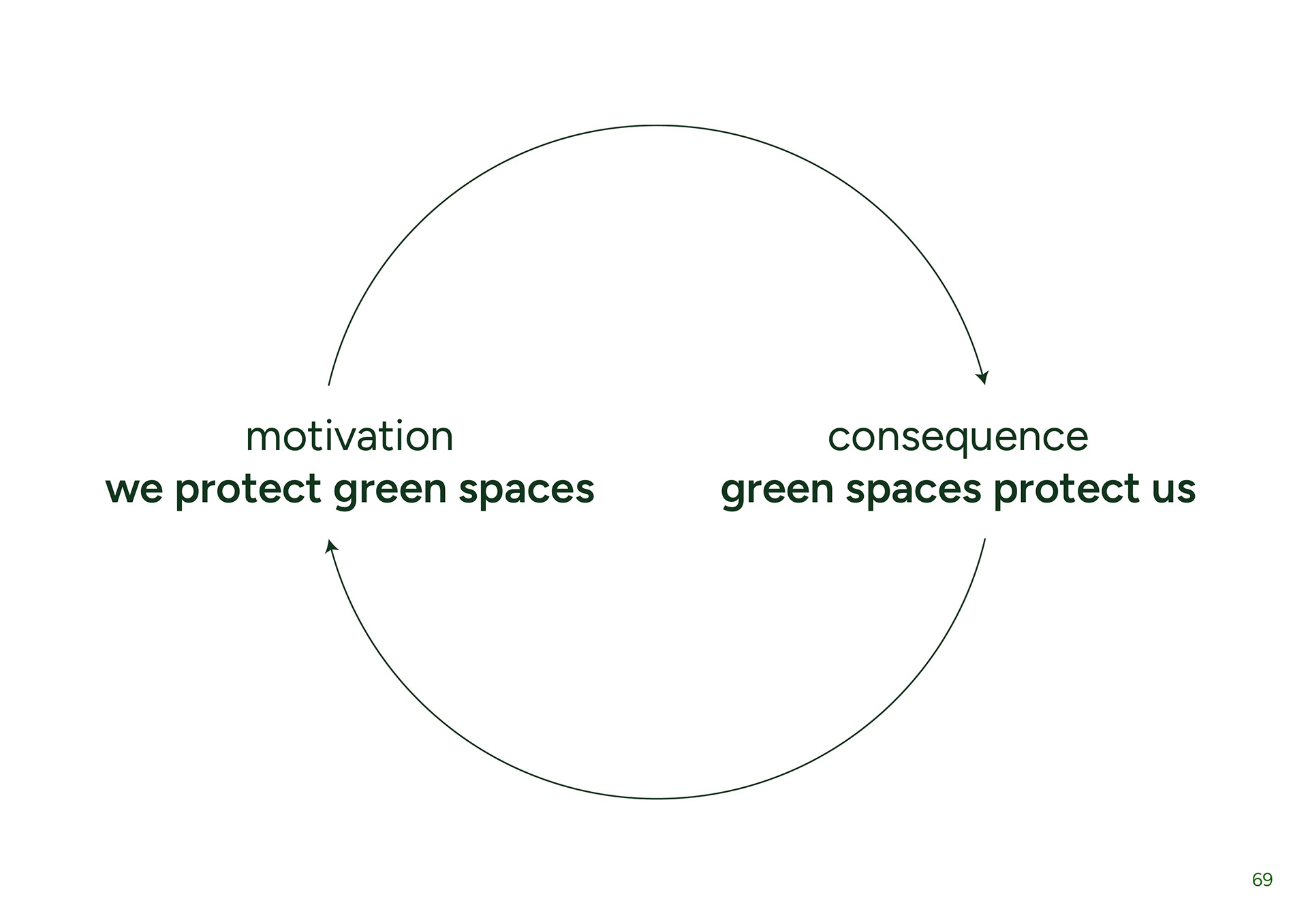
Transforming how communities can register their interest from thinking from wanting to 'own' spaces, the process became more relational: green spaces protect us, and we protect green spaces. Sanctuary spaces focuses on using the Community Right to Buy Part 2 (registering community interest in land), and offers a partnership between organisations that support communities to own land and integration networks.Sanctuary Spaces also offers peer support from members of Community Land Scotland and Development Trust Association Scotland, providing inspiration for groups and an opportunity to find out more how the process works in reality.
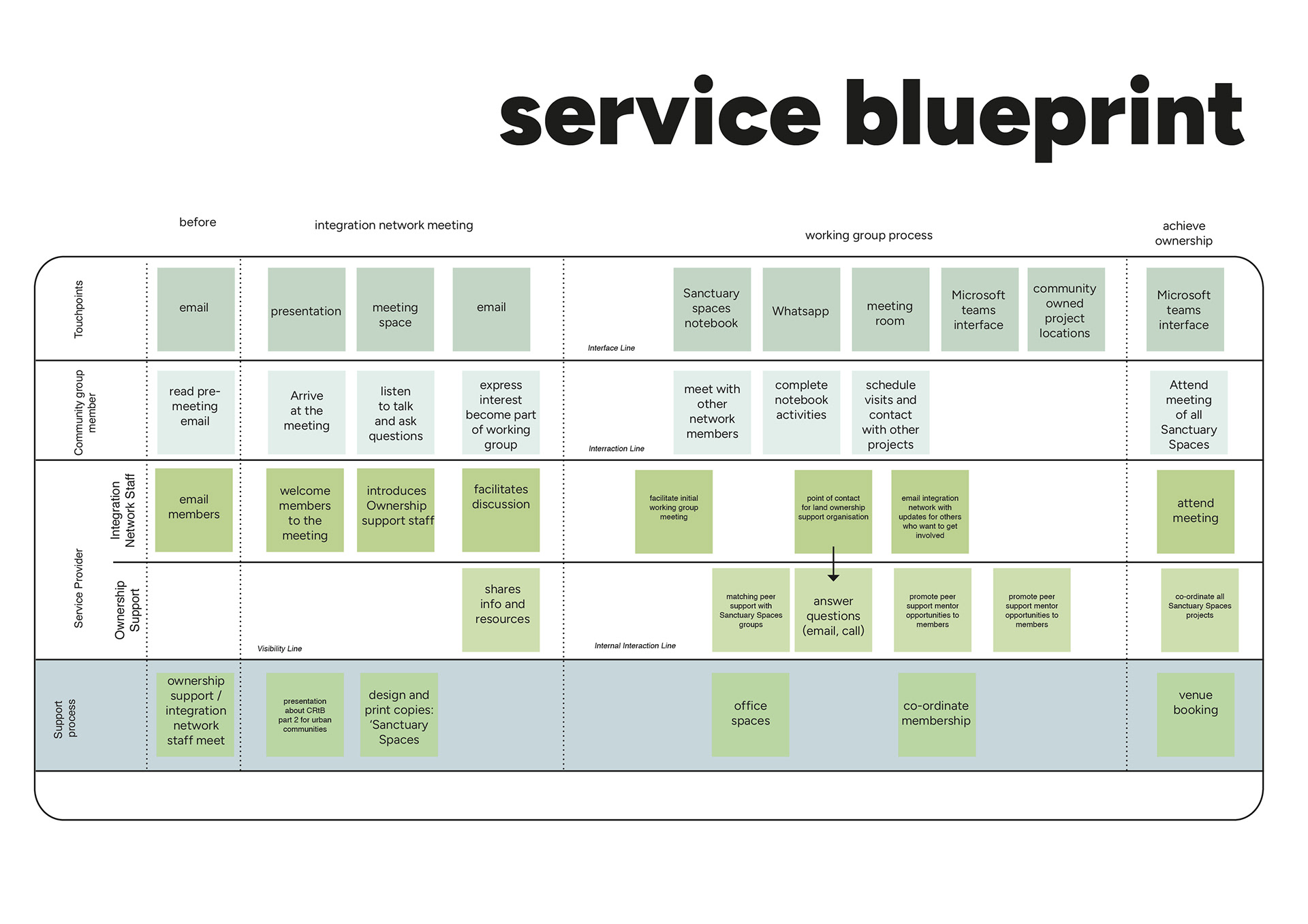
TOUCHPOINT: SANCTUARY SPACES LOGBOOK
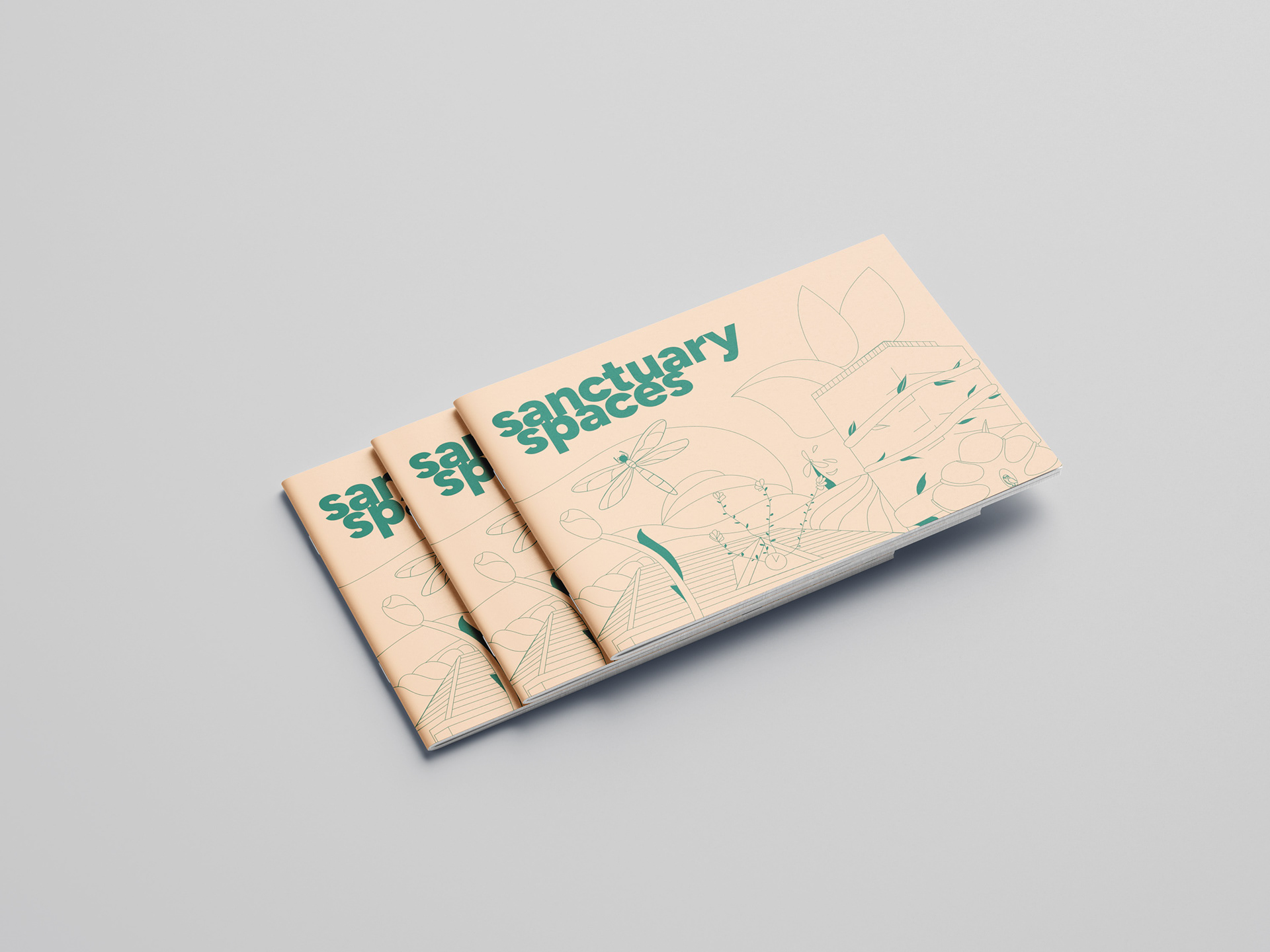
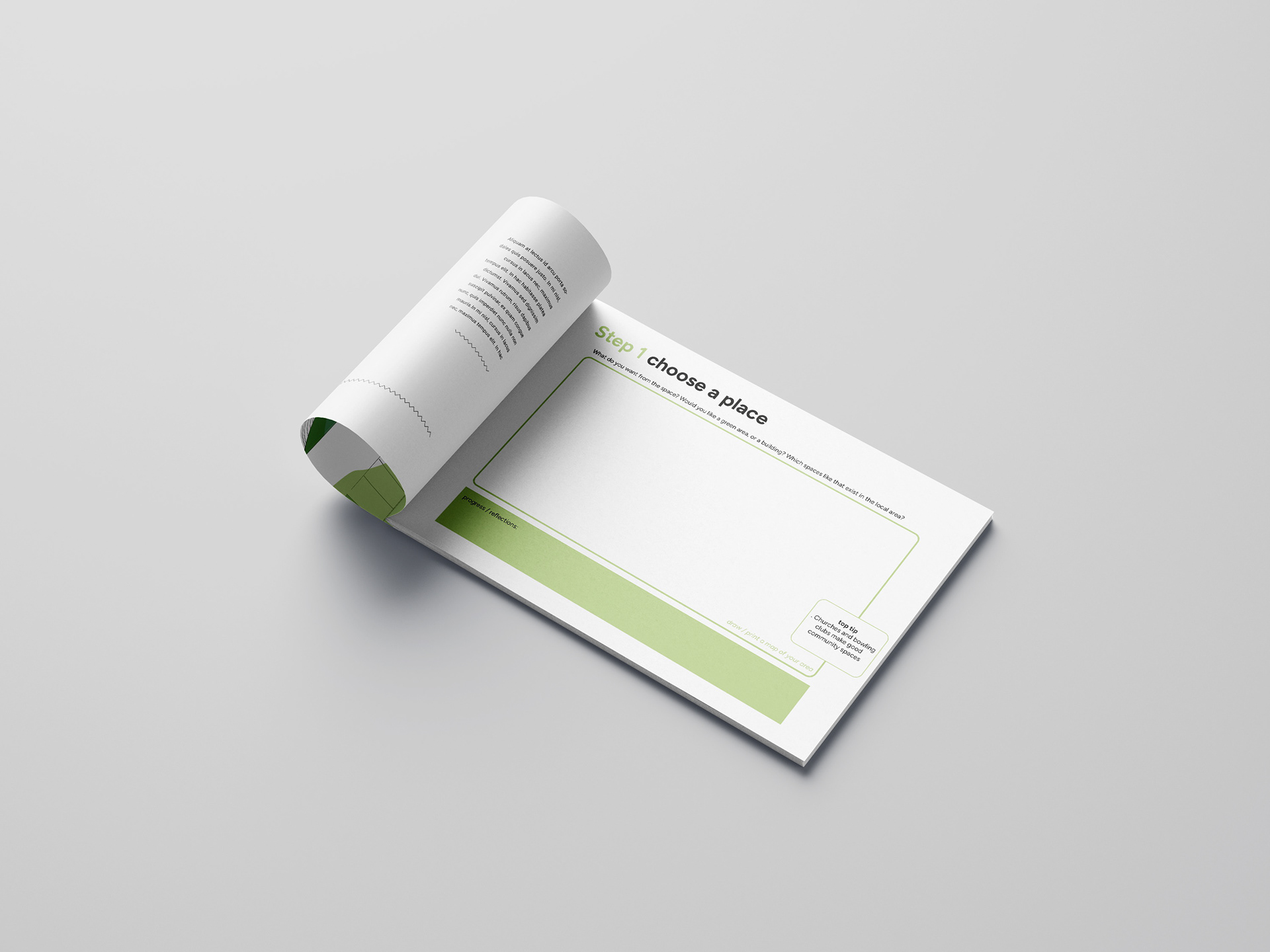
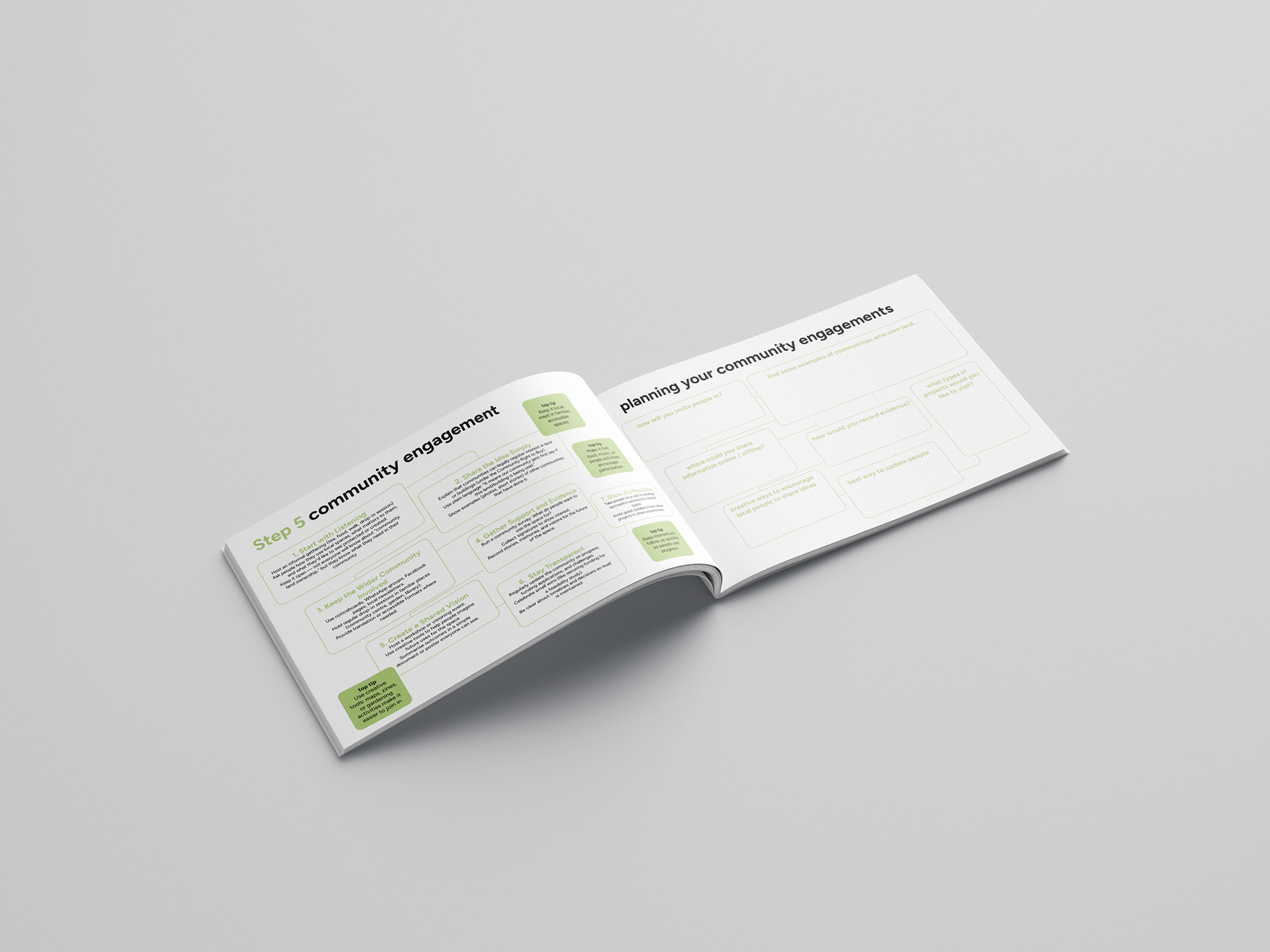
The logbook is an interactive workbook that breaks down the complex process of registering interest in land into plain language, with prompts and activities that help groups generate ideas, track their progress and reflect on progress. This service touchpoint reduces the hours of support needed by each group which means that community land organisations can provide guidance to more groups. The reflections can also be used by groups to document some of the systemic or policy-related challenges that groups are facing and be used to provide evidence to the Scottish Government and other key decision-makers.
Impact
Sanctuary Spaces was developed as part of a Masters thesis exploring how service design can support racialised communities to reclaim urban land through Scotland’s Community Right to Buy legislation. The project foregrounds research as a tool for translation and agency, bridging policy, lived experience, and participatory design.
Key contributions include:
Translating complex land ownership legislation into accessible, community-facing formats
Prototyping a logbook touchpoint to scaffold collective decision-making
Applying decolonial and relational design theory to Scottish policy context
Demonstrating how service design can surface systemic barriers and reimagine civic infrastructure
Offering a speculative framework for community-led stewardship of disused urban sites